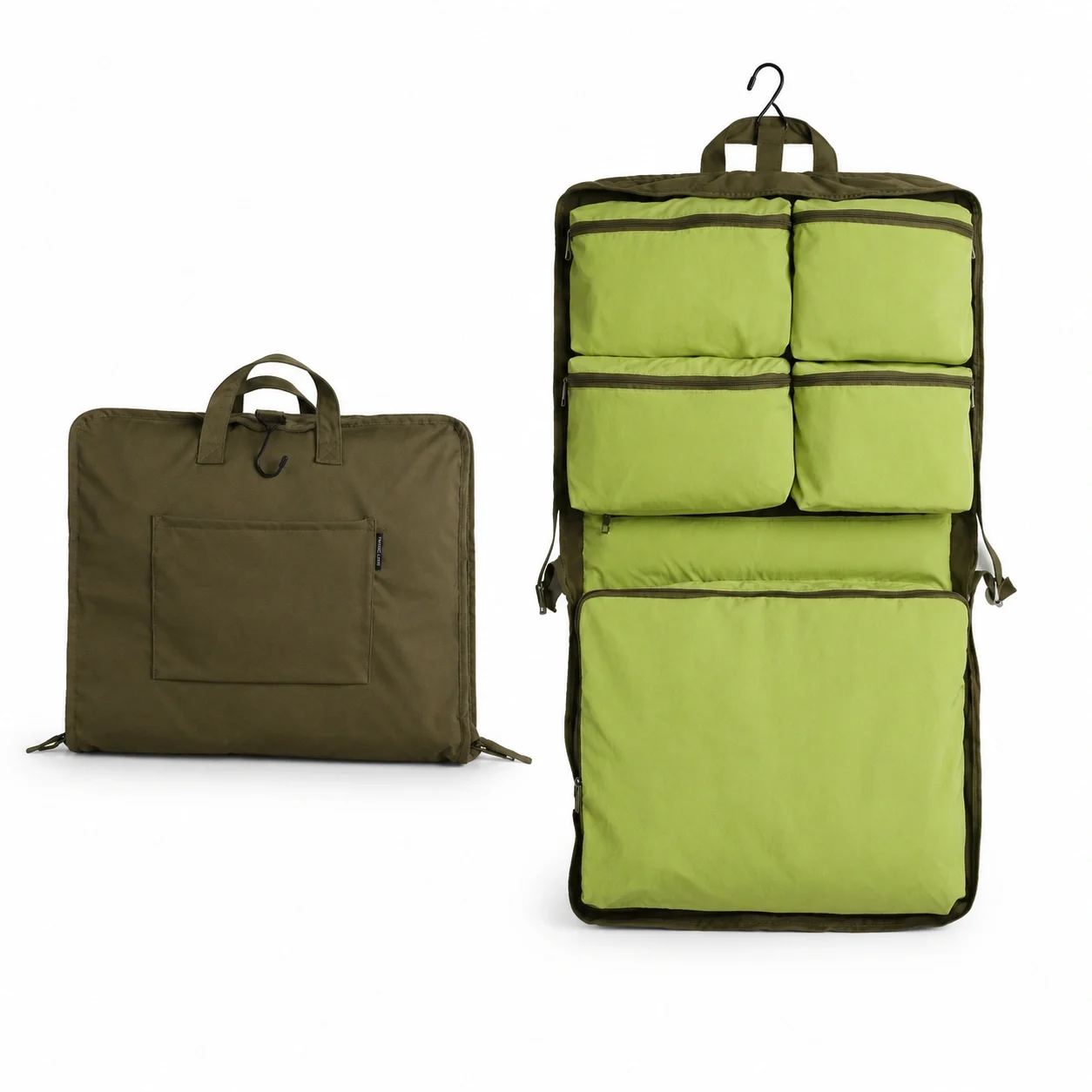
Forgotten items usually come from dispersed storage, not poor memory. A charger remains in an outlet, toiletries sit in the shower, or clothing disappears into a drawer because the room was packed in a random order.
A fixed 15-minute checkout routine turns the room into a sequence of zones. Adjust the time for the size of the room and the number of travelers, but keep the order consistent.
Before the 15 minutes: prepare the night before
Place items that will not be used again into their normal packing categories. Separate clean, wear-again, and worn clothing. Charge devices early enough that the cables can be packed before sleep when possible.
Keep only the final morning essentials outside the bag. This reduces the number of loose objects that must be found under time pressure.
Minutes 0–3: bathroom
- Check the shower, bathtub edge, sink, counter, mirror shelf, hooks, and toilet area.
- Close and wipe travel bottles.
- Return products to their assigned organizer sections.
- Check towels and hanging garments.
- Confirm medication and personal-care items are accounted for.
A hanging organizer can simplify this stage because the bathroom category remains concentrated in one visible station.
Minutes 3–6: bed and clothing
- Pull back bedding and check both sides of the bed.
- Look beneath the bed and nearby furniture.
- Empty wardrobes, drawers, luggage racks, and hooks.
- Check pockets in robes, jackets, and clothing.
- Place all clothing into clean, wear-again, or worn categories.
Close each packing cube only after the room has been checked. An empty cube section can act as evidence that a category has not been packed yet.
Minutes 6–9: electronics and work area
- Trace every charging cable from the device to the outlet.
- Check behind desks, bedside tables, televisions, and chairs.
- Collect adapters, power banks, headphones, and small accessories.
- Review the hotel safe and any locked storage.
- Confirm work documents and identification are present.
Pair every device with the accessory it needs. A charger found without its device—or a device without its charger—signals that the search is incomplete.
Minutes 9–12: room perimeter
Walk clockwise from the entrance and inspect every surface at eye level, then below eye level. Check windowsills, shelves, tables, luggage racks, chairs, the minibar area, and the floor along the walls.
A fixed direction prevents repeated checking of the same area while another area is missed.
Minutes 12–14: bag audit
Open each luggage section and confirm the core categories:
- Identification, wallet, and travel documents
- Required medication
- Phone and charging equipment
- Clothing
- Toiletries
- Footwear
- Keys and small personal items
Make sure frequently needed transit items remain accessible and are not buried beneath clothing.
Minute 14–15: final door check
- Check the safe one final time.
- Check the bathroom doorway and shower.
- Look at every outlet.
- Count the bags.
- Confirm the room key and checkout instructions.
- Stand at the door and scan the entire room before leaving.
Use a departure photograph
After the final scan, take a quick photograph of the cleared room and the number of bags. This can provide a useful reference if you later question whether an item was left behind. Respect privacy and do not capture other people or sensitive information.
Make organization support memory
The best checkout routine begins at arrival. Use fewer surfaces, keep categories together, and return items to the same locations after use. DEPOZA packing cubes, travel bottles, and hanging organizers are intended to support that repeatable structure. Explore the collection and build a travel routine that is easier to close out.