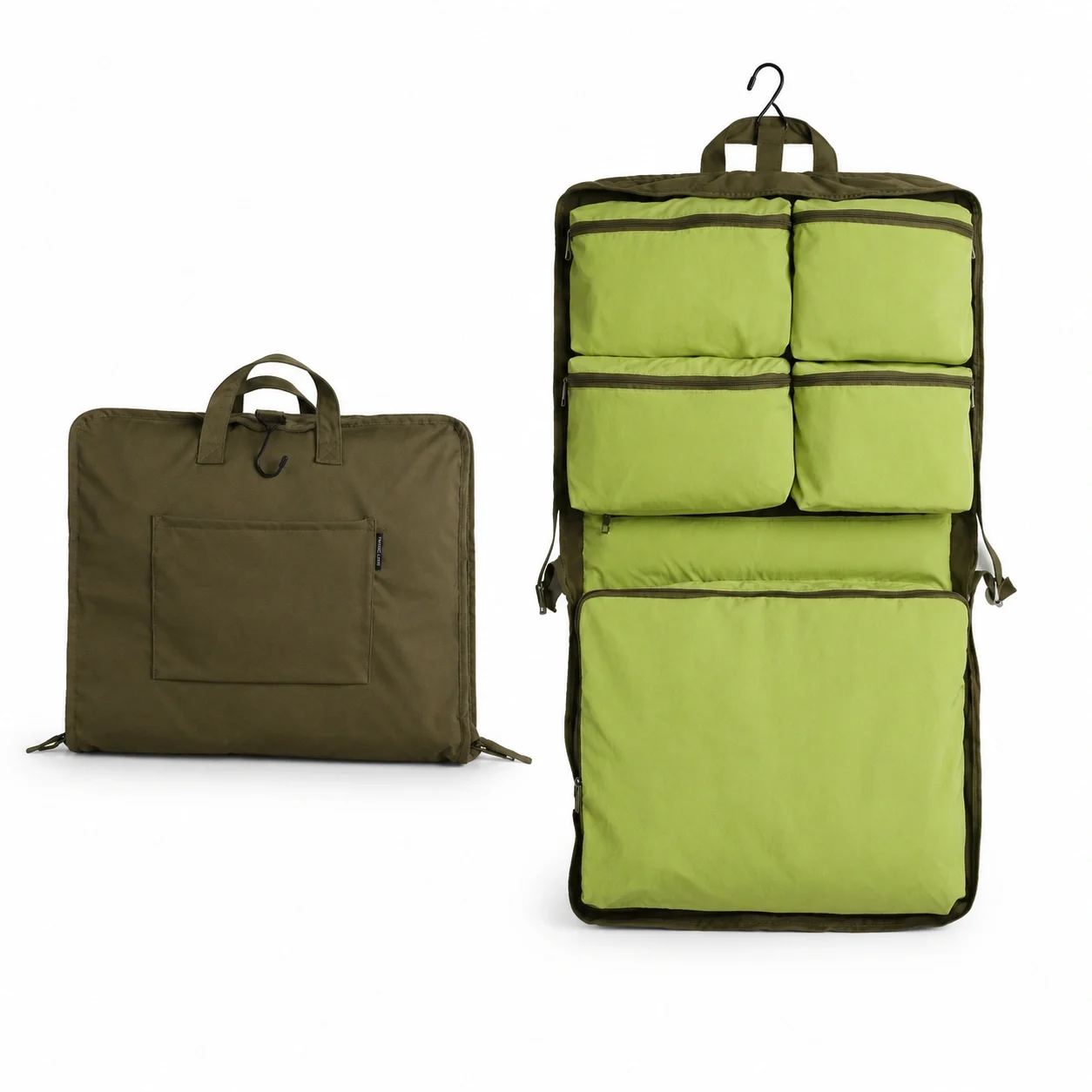
A suitcase often begins as an organized grid and ends as one mixed pile. The problem is not usually folding technique. It is the absence of a plan for how the bag will change after the first day.
A better layout assigns space not only to what leaves home, but also to what returns: worn clothing, partially used toiletries, receipts, damp items, and small purchases.
Divide the suitcase into stable and changing zones
The stable zone contains items that remain organized for most of the trip: clean clothing, backup items, and pieces reserved for a specific event.
The changing zone is designed for items that move between categories: worn clothing, clothing that may be worn again, toiletries in daily use, and objects collected during the trip.
When both zones are planned, the suitcase can change without becoming chaotic.
Keep clean clothing inside defined modules
Organize clean clothing by type, outfit, or stage of travel. Packing cubes help maintain those boundaries when the suitcase is opened repeatedly.
Do not unpack every item into an unfamiliar hotel space unless that improves the routine. A cube can move directly into a drawer and remain the storage unit, reducing the number of loose pieces that must be remembered at checkout.
Create a worn-clothing destination before departure
Choose the container or section for worn clothing while packing at home. An empty cube, a laundry bag, or a reserved suitcase area can serve this purpose.
Without a defined destination, worn clothing tends to spread across chairs, floors, and clean sections of the bag. At the end of the trip, everything is treated as dirty because the categories have become uncertain.
Add a separate “wear again” category
Some items are not fully clean but do not need laundering after one use. Mixing them with either clean or clearly worn clothing creates confusion.
Use a small breathable section, a specific side of a cube, or another clearly identified space. The exact container is less important than making the category visible.
Isolate shoes and outside-contact items
Shoes, umbrellas, and other items that contact outdoor surfaces should not move freely through the clothing zone. Use a dedicated cover or section and make sure damp items can dry before long-term packing.
Do not seal visibly wet items next to clothing. Moisture management depends on the material and product, so allow adequate drying and follow care instructions.
Give toiletries an unpacking position
Toiletries are used frequently and are more likely to remain in a bathroom when departure is rushed. A hanging organizer can create one visible station instead of distributing items across drawers and counters.
Keep the number of bathroom locations low. The more surfaces used, the more places that must be checked.
Control small essentials with one catch-all zone
Receipts, keys, adapters, lip balm, cards, and other small objects often cause the most searching. Select one pouch or organizer section for items that do not belong elsewhere.
This should not become a permanent junk drawer. Review it each evening and return objects to their primary locations.
Pack the return trip in stages
- Separate clean, wear-again, and worn clothing.
- Close toiletries only after checking caps and wiping containers.
- Place shoes and outside-contact items in their defined section.
- Gather electronics and pair them with chargers.
- Empty hotel drawers, outlets, the bathroom, safe, and bedside area.
- Use the remaining buffer space for new items.
Choose a layout that survives use
A beautiful departure-day suitcase is not enough. The useful layout is the one that remains understandable on day three and can be rebuilt quickly on the final morning.
The DEPOZA packing and hanging-organization products are designed to create these clear zones. Review the current collection and build a layout around clean, changing, and high-access categories.