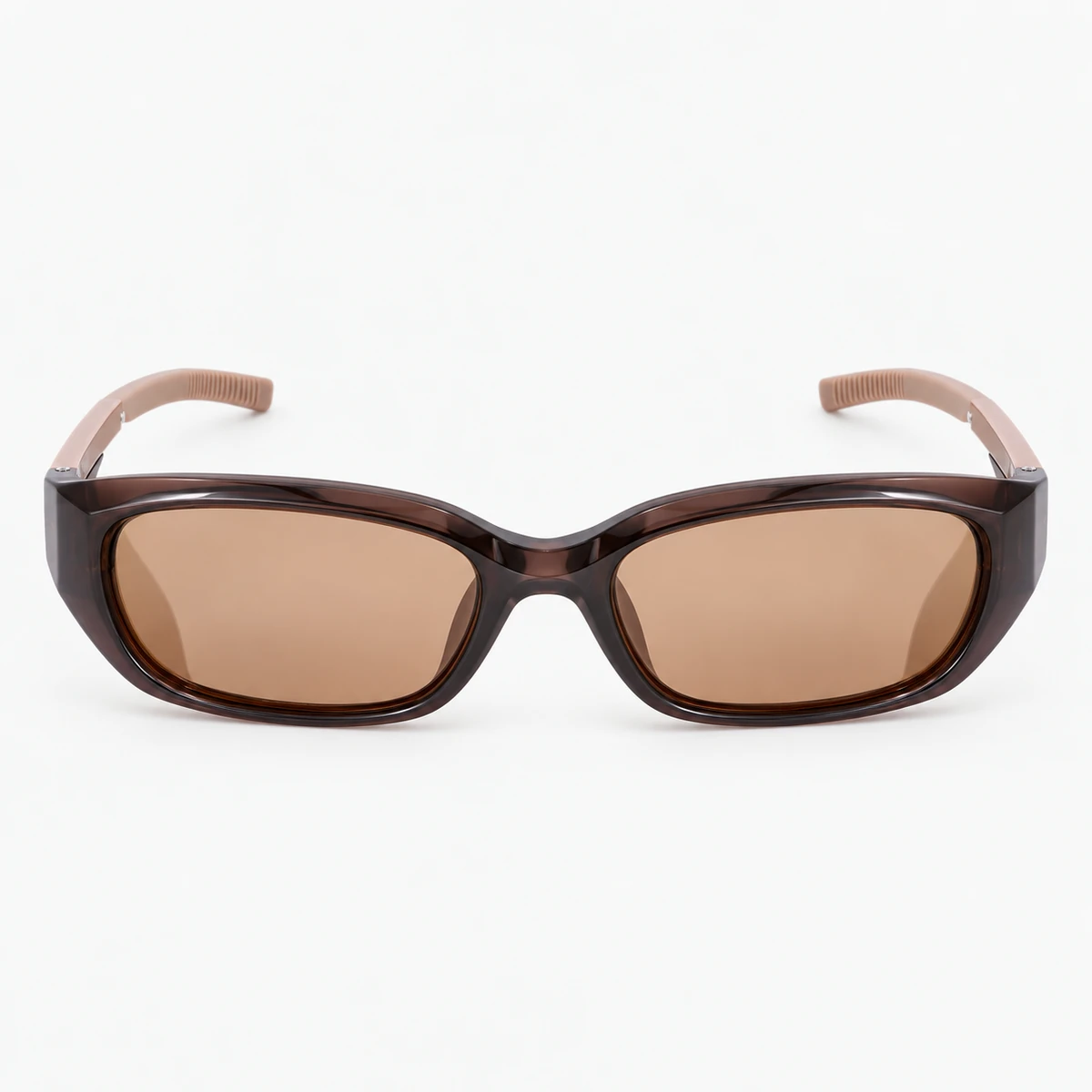
Foldable sunglasses can reduce the space required for eyewear, but compactness is only one part of the decision. A frame still needs to fit, open reliably, protect the lenses in storage, and provide clearly documented lens information.
Use this checklist before choosing a travel pair.
Confirm the open-frame measurements
Review the final lens width, bridge width, temple length, and overall frame width. Compare them with a pair that fits you well. A folding mechanism does not compensate for a frame that is too narrow, too wide, or poorly aligned with the face.
Measurements should come from the finished product, not from a visually similar frame.
Understand how the frame folds
Look at the number and location of hinges, the direction of each fold, and the final folded shape. More moving points can create compact storage, but they also make correct opening and closing more important.
Do not force a hinge past its intended direction. Follow the product instructions and keep grit or debris away from moving parts.
Check the folded dimensions and case
A foldable frame should be evaluated in its stored form. Confirm the folded thickness and the case or protective method supplied or recommended. Compact glasses placed loose in a pocket or bag can still be scratched, crushed, or opened unintentionally.
The complete storage system—not the frame alone—determines how practical it is for travel.
Require specific lens information
Terms such as “UV protection,” “polarized,” tint category, impact performance, and optical quality should be supported by accurate product specifications and applicable testing or documentation. Do not infer performance from lens color or marketing photography.
Before purchase, review exactly what the seller states for the selected lens option.
Consider when and where the glasses will be used
Driving, water activities, snow environments, bright cities, and everyday walking can create different preferences for tint, glare management, and frame coverage. A single pair may not be appropriate for every condition.
Choose based on documented characteristics and the intended use rather than the smallest folded size.
Inspect the prescription workflow
A prescription option requires more than adding a surcharge. The process should explain:
- Which prescriptions and lens types are accepted
- How current prescription details are submitted securely
- Whether pupillary distance is required
- How frame and lens compatibility are reviewed
- What is included in the quoted price
- Expected production and delivery timing
- Change, cancellation, remake, and return rules
Do not send prescription records through an unsecured general contact form. The order should not enter production until the information and scope are confirmed.
Check the return and adjustment policy
Standard and customized eyewear may have different return rules. Review the policy before payment, especially when lenses are made to order. The policy should explain what happens if the frame arrives damaged, the order differs from the confirmed specification, or an adjustment is needed.
Test the routine at home
Practice opening, wearing, cleaning, folding, and storing the frame. A good travel product should be easy to use correctly without rushing. Keep the lenses clean with an appropriate method and avoid placing pressure on the folded frame.
BAPORSSA options in the DEPOZA catalog
BAPORSSA Foldable Travel Sunglasses are listed as a separate eyewear brand with a standard option at $99 and a prescription-customization option at $149. The prescription option still requires a secure review and confirmation process before live fulfillment. View the current catalog and verify the final frame, lens, and policy details before ordering.