“Leakproof” is one of the most common promises in travel-bottle listings, but it should not replace inspection and testing. Leakage can depend on the closure, the liquid, temperature changes, pressure, how the bottle is filled, and whether product remains around the cap.
A better buying process evaluates the complete system.
Start with the products you actually carry
List the liquids or creams you normally bring and estimate the quantity required for the trip. Shampoo, conditioner, cleanser, lotion, and styling products can have different thicknesses and dispensing needs.
A container that works well with a thin liquid may be frustrating with a thick cream. Product compatibility matters more than having a large set of identical bottles.
Inspect the closure design
Look at how the cap closes and where liquid could escape. A simple design with parts that are easy to inspect and clean is often easier to maintain. Threads should engage correctly, lids should close completely, and removable components should return to their proper position after washing.
No closure eliminates the need to wipe the neck and cap before packing.
Do not overfill
Leaving appropriate headspace can reduce mess and makes the bottle easier to close cleanly. Filling to the absolute top may force product into the cap area and leave no margin for expansion or pressure changes.
Follow the container’s instructions and do not use it for materials the manufacturer excludes.
Label every bottle
Similar containers become difficult to distinguish in a shower or shared bathroom. Use labels that remain readable in damp conditions and include the product name. When several people share a set, add initials or another clear identifier.
Relabel the bottle when the contents change. Old labels create avoidable confusion.
Test at home before the trip
- Fill the bottle with the intended product.
- Clean the exterior and closure area.
- Close it according to the instructions.
- Place it in a separate sealed test bag.
- Store it on different sides for several hours.
- Gently handle it as it might be handled in luggage.
- Check the cap, threads, and surrounding bag for residue.
A home test does not guarantee performance under every travel condition, but it can reveal an obvious compatibility or closure problem before the bottle enters a suitcase.
Plan secondary containment
Even a well-tested bottle should be kept apart from clothing, documents, and electronics. Use a toiletry bag or another suitable secondary container. This limits the consequences of a loose cap, damaged container, or unexpected pressure change.
Consider cleaning and drying
A travel bottle is reusable only when it can be cleaned effectively. Check whether the opening allows the product to be removed, whether components can be rinsed, and whether the bottle can dry fully before storage.
Do not mix products unless you know they are compatible, and do not refill over old residue without appropriate cleaning.
Check current travel rules
Container size, placement, screening, and permitted contents can vary by airport, route, and authority. Do not treat a product name or marketing phrase as universal approval. Review the current rules that apply to your trip.
Choose the quantity by routine
A four-bottle set can support a focused routine without encouraging a large collection of rarely used products. Assign each bottle a stable role and pack only what the trip requires.
Build a coordinated toiletry system
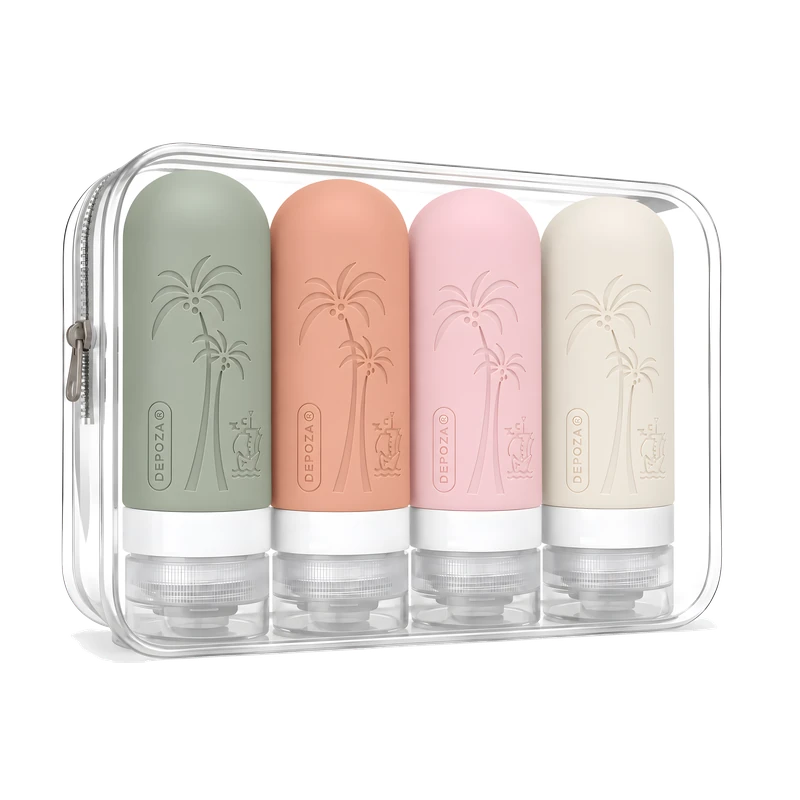
The DEPOZA 4-Pack Travel Toiletry Bottles are intended to create a simple, labeled four-product setup. Final material, capacity, closure, and care details should always match the product page before purchase. View the DEPOZA travel-bottle collection.