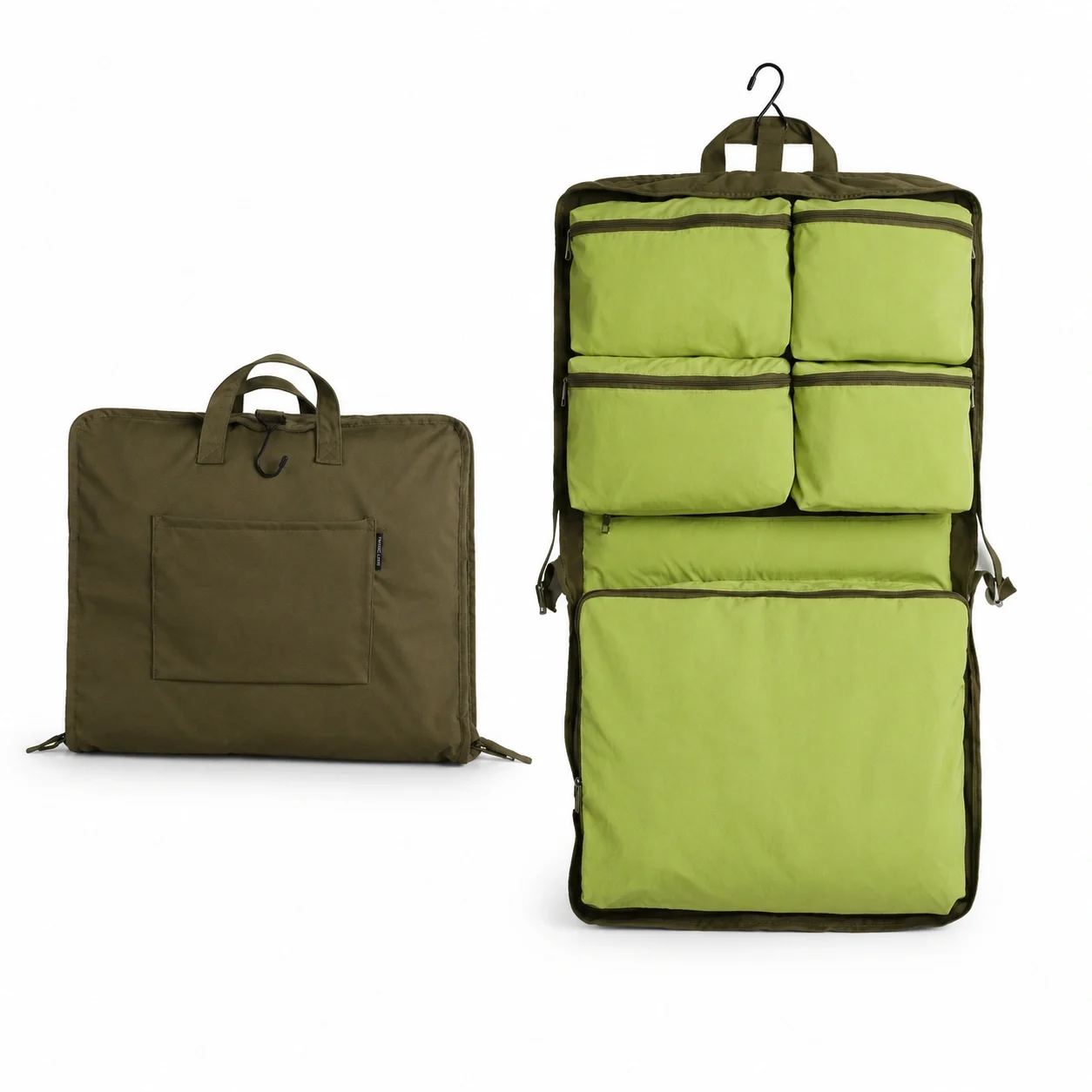
Packing cubes and compression bags are often discussed as if they are competing versions of the same product. They are not. A packing cube primarily creates categories and access. A compression bag is intended to reduce the volume of suitable soft items by removing air or applying mechanical pressure.
The better choice depends on the problem you need to solve.
Choose packing cubes when organization is the priority
Packing cubes divide an open suitcase into smaller modules. They can separate clothing types, outfits, travelers, or stages of a trip. Because each module opens independently, the rest of the bag can remain intact while one category is used.
They are especially useful when:
- You will open the bag repeatedly.
- You are moving between several locations.
- You want a first-night or next-day module.
- Two people share luggage.
- You want to transfer clothing into drawers without fully unpacking.
A standard packing cube should not be assumed to compress clothing unless the specific product is designed and verified for that purpose.
Choose compression bags when volume is the priority
Compression bags can reduce the volume of compressible items such as some clothing or soft textiles. Vacuum versions require a way to remove air; roll-style versions push air through a valve; zip-compression designs use an additional zipper or panel.
They can be useful when:
- You are packing bulky soft items.
- Storage volume is more restrictive than weight.
- You will not need frequent access.
- You have a reliable way to recompress items for the return trip.
Reduced volume does not reduce weight. A smaller-looking bag can still exceed a luggage allowance if more items are added.
Compare access
Packing cubes usually provide faster access because the contents remain visible and separated. Compression bags are less convenient when they must be reopened, rearranged, and compressed again during the trip.
For a one-location stay, that may not matter. For a trip with several short stops, repeated recompression can become a burden.
Compare clothing condition
Both systems can crease clothing depending on fabric, folding, pressure, and duration. Strong compression can create deeper wrinkles in some materials. If appearance is important, test the method at home and place wrinkle-sensitive items in a lower-pressure section.
Compare failure points
A packing cube remains usable even if it is not filled perfectly. A compression bag may lose part of its benefit if a valve, seal, or compression zipper cannot be used as intended. Vacuum systems also create a return-trip question: will the same equipment be available?
Use both systems only when responsibilities are clear
A hybrid setup can work. Bulky, low-access items may go into a compression bag while everyday clothing remains in cubes. The mistake is adding containers without reducing complexity.
Every container should have a reason:
- What category does it hold?
- How often will it be opened?
- How will it be repacked?
- Does it solve organization, volume, protection, or access?
Make the choice by trip type
Short city trip: packing cubes usually offer more value because access and quick repacking matter.
Cold-weather trip: compression may help with bulky soft layers, while cubes keep daily clothing organized.
Road trip: separate cubes can create modules for different stops without unpacking everything.
Long single-location stay: either method may work, depending on luggage volume and access frequency.
DEPOZA’s current approach
The DEPOZA 4-Piece Packing Cube Set is presented as an organization system, not as a compression product. It is intended to create visible categories and a more repeatable suitcase layout. Explore the DEPOZA packing collection when organization and access are the main goals.