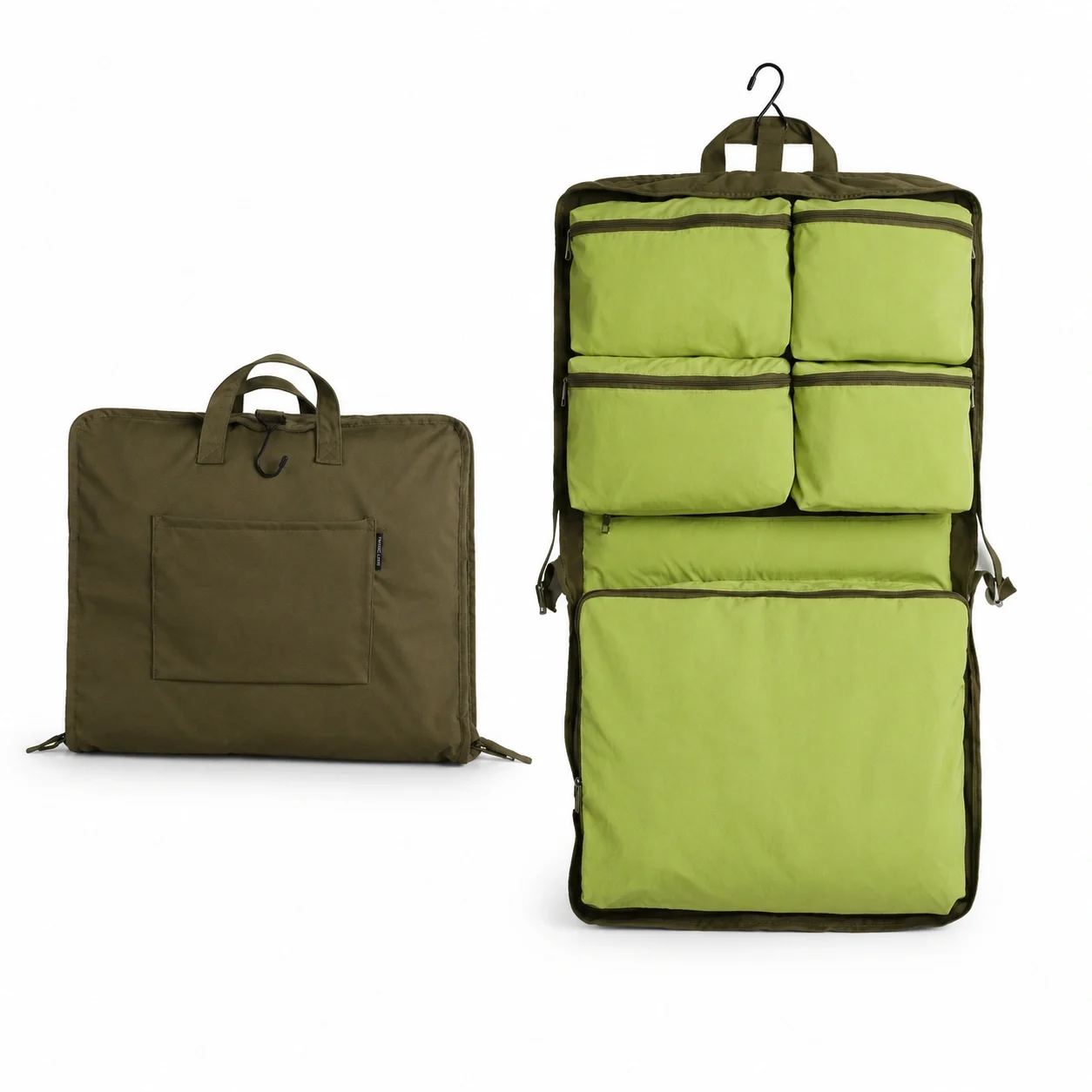
A carry-on becomes easier to manage when its structure stays mostly the same from one trip to the next. Instead of inventing a new layout every time, use a small number of zones with fixed responsibilities. The products and quantities may change, but the logic remains familiar.
Zone 1: clothing
Start with the activities on the itinerary, then build outfits around pieces that can be used more than once. Pack clothing as a category rather than scattering individual items around the bag.
A packing cube can keep this zone intact when the suitcase is opened. For a longer trip, divide clothing by type or by stage of travel. For a short trip, one main clothing cube and one smaller essentials cube may be enough.
Zone 2: toiletries
Use only the products required for the length of the trip. Decanting familiar toiletries into a coordinated bottle set can reduce bulk and make quantities easier to control. Label each bottle before departure and check current liquid rules for the relevant airport and carrier.
Keep toiletries in a separate bag or organizer so they can be removed quickly when required and so any spill is less likely to affect clothing.
Zone 3: transit essentials
This is the category you need while moving: identification, wallet, itinerary, medication you may require in transit, charging cable, headphones, and a small comfort item. It should be accessible without opening the main clothing area.
Use one exterior pocket, personal-item pouch, or top compartment. The exact location matters less than using the same location on every trip.
Zone 4: electronics and work items
Group devices, adapters, and cables according to their use. A cable without the device it serves is clutter; a device without its required charger is a problem. Check each pair before packing.
If a backpack is part of the system, verify the final product dimensions and compare them with the airline rules for your ticket. Capacity alone does not determine whether a bag qualifies as a personal item or carry-on.
Zone 5: return-day space
Reserve some space for what changes during the trip. Clothing will not fold exactly the same way, receipts accumulate, and a small purchase may need a place. A bag packed to absolute capacity on departure is difficult to manage on the return journey.
One partially empty cube or an unused flat pouch can become the return-day zone for worn clothing, documents, or new items.
Use a fixed pre-departure sequence
- Check documents and required medication.
- Confirm the itinerary and dress needs.
- Lay out clothing and remove duplicates.
- Fill and label toiletries.
- Pair every device with its charger.
- Pack by zone.
- Weigh and measure the final bag when relevant.
- Leave a small buffer.
Running the same sequence reduces forgotten items because memory is supported by process.
Create a first-night module
Arrival can be delayed, tiring, or rushed. Place the first items you need near the top: sleepwear, a clean outfit, basic toiletries, and chargers. If the carry-on also contains items for several days, the first-night module prevents a full unpacking session.
Photograph the finished layout
Before closing the bag, take one photograph of the open carry-on. It provides a fast reference when repacking and helps reveal whether something has been left behind. Over several trips, the image also becomes a useful record of what you actually used.
Choose products that support the system
Packing cubes, travel bottles, a structured organizer, and an appropriately sized backpack can each serve one of these zones. The product is useful when its responsibility is clear. View the DEPOZA collection and build a carry-on setup around the way you travel.